Danish Gambit Accepted 3... dxc3


navigation icon For navigation

[: Chess Openings - See All Lessons]

[•: To the Main Page of the Danish Gambit]

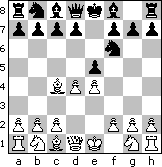
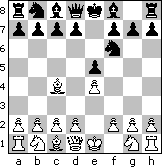
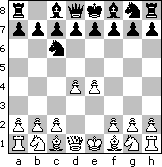
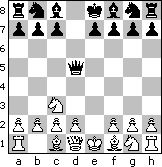
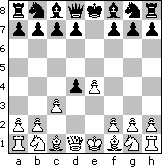
On this page of chess-openings-for-beginners.blogspot.com we will learn the Danish Gambit Accepted 3... dxc3. The accepted Danish Gambit is the main line and the most popular play of this chess opening (50% of the gambit's games at master level). The Danish Gambit starts with 1.e4 e5 2.d4 exd4 3.c3 (figure 1), and then Black accepts the Gambit moving 3... dxc3 (figure 2).

I. Danish Gambit Accepted 3... dxc3


Below we can see the Danish Gambit (1.e4 e5 2.d4 exd4 3.c3) in figure 1 and the Danish Gambit Accepted (3... dxc3) in figure 2. Black has accepted the gambit and taken 2 pawns sacrificed by White on will. It is the main idea of the Danish Gambit: 2-pawn sacrifice for quick development. The best White moves to respond the Danish Gambit Accepted are: 3.Bc4 (70%) and 3.Nxc3 (25%).

  Figure 1. Danish Gambit       Figure 2. Danish Gambit Accepted
Danish Gambit    Danish Gambit Accepted
Moves: 1.e4 e5 2.d4 exd4 3.c3 dxc3
Chess Opening in Figure 1: Danish Gambit
Play Name in Figure 2: Danish Gambit Accepted
Code in the Encyclopedia of Chess Openings (ECO): C21

Note 1. The Danish Gambit Accepted has 2 official sub-variants:
1. The Schlechter Defense (see figure 2) (3... dxc3) 4.Bc4 cxb2 5.Bxb2 d5 (10%)
2. The Collijn Defense (see figure 2) (3... dxc3) 4.Bc4 cxb2 5.Bxb2 Qe7 (2-3%).
Note 2. The gambit can be declined (see figure 1) via 3... d5 (Soerensen Defense), d3, Qe7, Nc6, Nf6.

Learn the proven lines of the Danish Gambit Accepted (see How to Play). They were proved by an opening book, by master games on the Danish Gambit Accepted, and by a chess engine that calculates and shows the following: + is White; - is Black; 0-0.50 equal; 0.51-1.00 slightly better; 1.01-1.50 better; 1.51 much better. Examples: +1.27 (White is better as if White won 1.27 pawns by material). -0.78 (Black is slightly better as if Black won 0.64 pawns). -0.49 (equal). ? weak move.

II. How to Play Danish Gambit Accepted 3... dxc3


1.e4 e5 2.d4 exd4 3.c3 dxc3

Chess masters play: 4.Bc4 (70%)
Played less common: 4.Nxc3 (25%)
Rarely (not recommended): Nf3, bxc3, Qb3, Bd3, Ne2.


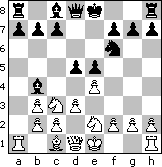
• Main Variants via 4.Bc4 (70%)

Danish Gambit Accepted 3... dxc3

Danish Gambit Accepted
Note 1. The Danish Gambit Accepted often turns into the Schlechter Defense.
First Learn the Schlechter Defense (3... dxc3) 4.Bc4 cxb2 5.Bxb2 d5

Note 2. See below other lines of the Danish Gambit Accepted played via 4.Bc4:
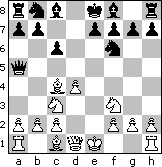
4.Bc4 cxb2 5.Bxb2 Bb4+ 6.Nd2 Nf6 7.Bxf7+ Kxf7 8.Qb3+ d5 (-0.78)
4.Bc4 cxb2 5.Bxb2 Nf6 6.e5 d5 7.exf6 dxc4 8.Qxd8+ Kxd8 (+0.07)
4.Bc4 Nc6 5.Nxc3 Nf6 6.Nf3 Bb4 7.0-0 0-0 8.e5 Bxc3 (-0.08)

• Variants via 4.Nxc3 (25%)

Danish Gambit Accepted 3... dxc3

Danish Gambit Accepted
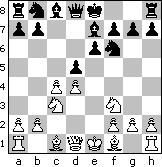
4.Nxc3 Nc6 5.Nf3 Bb4 6.Bc4 d6 7.0-0 Bxc3 8.bxc3 Nf6 (+0.00)
4.Nxc3 d6 5.Bc4 Nc6 6.Nf3 Nf6 (-0.07)
4.Nxc3 Bb4 5.Bc4 Bxc3+ 6.bxc3 Qe7 (-0.49)

To the Main Page of the Danish Gambit | Lesson 26

On this page of chess-openings-for-beginners.blogspot.com we learned the Danish Gambit Accepted 1.e4 e5 2.d4 exd4 3.c3 dxc3, ECO C21. The Danish Gambit Accepted is the most common play of the Danish Gambit, and it often turns into the the Schlechter Defense (as sub-variant). The best White moves to respond the Danish Gambit Accepted are: 3.Bc4 (70%) and 3.Nxc3 (25%)...

Danish Gambit Schlechter Defense C21


navigation icon For navigation

[: Chess Openings - See All Lessons]

[•: To the Main Page of the Danish Gambit]

On this page of chess-openings-for-beginners.blogspot.com we will learn the Schlechter Defense of the Danish Gambit. The Schlechter Defense is a relatively popular variation of the Danish Gambit which shows a full beauty of this chess opening. The Danish Gambit starts with 1.e4 e5 2.d4 exd4 3.c3 (Figure 1), and the Schlechter Defense is 3... dxc3 4.Bc4 cxb2 5.Bxb2 d5 (see Figure 2).

I. Danish Gambit Schlechter Defense


The Schlechter Defense is a sub-variant of the Soerensen Defense (3... dxc3); it covers 10% of the Danish Gambit games played at master level. The best respond to the Schlechter Defense is 6.Bxd5. It is a Danish Gambit Accepted and a beautiful variation for beginners who must know how to return the lost queen... Figures 1 and Figures 2 represent the Danish Gambit and the Schlechter Defense:

  Figure 1. Danish Gambit      Figure 2. Schlechter Defense
Danish Gambit chess opening   Danish Gambit Schlechter Defense
Moves: 1.e4 e5 2.d4 exd4 3.c3 dxc3 4.Bc4 cxb2 5.Bxb2 d5
Chess Opening (Figure 1): Danish Gambit
Variation Name (Figure 2): Schlechter Defense
Accepted/Declined: Danish Gambit Accepted

Parent Variation: Soerensen Defense (1.e4 e5 2.d4 exd4 3.c3 dxc3)
ECO Code in the Encyclopedia of Chess Openings: C21

Learn the proven lines of the Schlechter Defense of the Danish Gambit (see How to Play). They were proved by an opening book, by the Danish Gambit master games, and by a chess engine that calculates and shows the following: + is White; - is Black; 0-0.50 equal; 0.51-1.00 slightly better; 1.01-1.50 better; 1.51 much better. Examples: +1.27 (White is better as if White won 1.27 pawns by material). -0.64 (Black is slightly better as if Black won 0.64 pawns). +0.42 (equal). ? weak move.

II. How to Play the Schlechter Defense


1.e4 e5 2.d4 exd4 3.c3 dxc3 4.Bc4 cxb2 5.Bxb2 d5

Chess masters play: 6.Bxd5 (90%)
Played rarely: exd5 (5%); Qxd5, Bb3? (in total 5%).
Learn how to return the lost queen in the Main Variant (for beginners).


• Main Variant via 6.Bxd5 (90%)

Danish Gambit Schlechter Defense

Danish Gambit Schlechter Defense
6.Bxd5 Nf6 7.Bxf7+ Kxf7 8.Qxd8 Bb4+ 9.Qd2 Bxd2+ 10.Nxd2 Re8 (+0.00)
Note. White wins the queen via 7.Bxf7+, and Black returns it by 8... Bb4+ using discovered attacks.
If 6... Bb4+, then 7.Nd2 Bxd2+ 8.Qxd2 Nf6 9.Qc3 c6 (+0.28)
If 7.Nc3, then 7... Bd6 8.Nf3 Nxd5 9.Nxd5 0-0 (-0.70)

• Variants via 6.exd5 (5%); Bb3, Qxd5 (in total 5%).

Danish Gambit Schlechter Defense

Danish Gambit Schlechter Defense
6.exd5 Nf6 7.Nc3 Bd6 8.Nf3 0-0 9.0-0 Bg4 (-0.53)
6.Qxd5 Qxd5 7.exd5 Bb4+ 8.Bc3 Bxc3+ 9.Nxc3 Nf6 (-0.85)
6.Bb3? Bb4+ 7.Bc3 Bxc3+ 8.Nxc3 Nf6 (-1.30)

To the Main Page of the Danish Gambit Lesson 26

You have learned the Schlechter Defense of the Danish Gambit (3... dxc3 4.Bc4 cxb2 5.Bxb2 d5). The Schlechter Defense is a relatively popular variation of the Danish Gambit which shows a full beauty of this chess opening. The best respond to the Schlechter Defense is 6.Bxd5. It is an effective play of the beautiful Danish Gambit which is recommended for beginners. ECO code is C21...

Bishop's Opening Classical Variation C23


navigation icon For navigation

[: Chess Openings - See All Lessons]

[•: To the Main Page of the Bishop's Opening]

On this page of chess-openings-for-beginners.blogspot.com we will learn the Classical Variation of the Bishop's Opening. Being a variation of the Bishop's Opening (1.e4 e5 2.Bc4), the Classical runs with the moves 1. e4 e5 2. Bc4 Bc5. Unofficially, it is called the Boi variation of the Bishop's Opening. The Classical Variation is ECO code C23 in the Encyclopedia of Chess Openings (C23 starts with 1.e4 e5 2.Bc4).

I. Bishop's Opening Classical Variation


The Classical Variation is not so popular as the Berlin Defense (1.e4 e5 2.Bc4 Nf6), but it belong to the main variations and covers 5% of the Bishop's Opening games at master level. The Classical Variation has 9 sub-variants which are played very rarely (find them here). The C23 Classical Variation runs as 1. e4 e5 2. Bc4 Bc5. See the Classical Variation in the following picture:

Bishop Opening Classical Variation
Moves: 1.e4 e5 2.Bc4 Bc5
Opening: Bishop's Opening
Variation: Classical Variation
ECO Code: C23

Study 20 Variations of the Bishop's Opening

You can learn below the proven lines of the Bishop Opening Classical Variation (How to Play). They have been proved by an opening book, by a Bishop Opening database, and by a chess engine showing who is better in pawns as follows: + White; - Black; 0-0.50 equal; 0.51-1.00 slightly better; 1.01-1.50 better; 1.51 much better. Examples: +1.27 (White is better as if White won 1.27 pawns by material). -0.64 (Black is slightly better as if Black won 0.64 pawns). +0.42 (position is equal).

II. How to Play Bishop Opening Classical Variation


1.e4 e5 2.Bc4 Bc5

Chess masters play 3.Nf3 (55%), Nc3 (20%), d3 (10%), c3 (5%).
They play very rarely 3.Qh5, b4, Qe2, Qf3, Qg4 (in total 8%).
x Watch 3.Qh5, Qf3 to avoid the Scholar's Mate (see below)
.

• Main Variant via 3.Nf3 (55%)

Bishop Opening Classical Variation

Bishop Opening Classical Variation
3.Nf3 Nc6(d6) 4.c3 Nf6 5.d3 d6(Nc6) 6.0-0 0-0 (+0.41)

• Variants via 3.Nc3 (20%), d3 (10%), c3 (5%)

Bishop Opening Classical Variation

Bishop Opening Classical Variation
3.Nc3 Nf6 4.d3 d6 5.Na4 Bb6 6.Nxb6 axb6 (+0.28)
3.d3 d6 4.Nc3 Nc6 5.Na4 Bb6 6.Nxb6 axb6 (+0.12)
3.c3 Nf6 4.d4 exd4 5.cxd4 Bb4+ 6.Bd2 Bxd2+ 7.Nxd2 d5 (+0.00)

x Watch 3.Qh5, Qf3 to avoid the Scholar's Mate

Bishop Opening Classical Variation

Bishop Opening Classical Variation
Watch 3.Qh5, Qf3 to avoid the Scholar's mate!
For example: 3.Qh5(Qf3) Nc6?? 4.Qxf7#

The best answers of Black to avoid the mate are:
If 3.Qh5, then 3... Qe7 4... d6(Nf6) (-0.27)
(NOT 3... g6: 3.Qh5 g6? 4.Qxe5+ Qe7 5.Qxh8 Qxe4+ Kf1 (-7.55))
If 3.Qh3, then 3... Nf6 (-0.36)

To the Main Page of the Bishop Opening (Lesson 22)

Here on chess-openings-for-beginners.blogspot.com you have learned the Bishop's Opening Classical Variation C23 (sometimes called as Boi Variation). The Bishop's Opening start with 1.e4 e5 2.Bc4, and the Classical Variation runs as 1.e4 e5 2.Bc4 Bc5. The best moves of White to answer the Classical are 3.Nf3, Nc3, d3, c3. (Chess beginners should watch 3.Qh5, Qf3 to avoid the Scholar's mate!)

Bishop's Opening Ponziani Gambit C24


navigation icon For navigation

[: Chess Openings - See All Lessons]

[•: To the Main Page of the Bishop's Opening]

On this page of chess-openings-for-beginners.blogspot.com we will learn the Ponziani Gambit of the Bishop's Opening. The Ponziani Gambit is a variation of the Bishop's Opening (1.e4 e5 2.Bc4), and it runs with 1.e4 e5 2.Bc4 Nf6 3.d4. The Ponziani Gambit may be accepted or declined (usually accepted because it is stronger). The Ponziani Gambit is C24 in the Encyclopedia of Chess Openings.

I. Bishop's Opening Ponziani Gambit


The Ponziani Gambit is a sub-variant of the Berlin Defense (1.e4 e5 2.Bc4 Nf6) that covers 70-75% of the Bishop's Opening games at master level. As for the Gambit, it coves only 7% of the games. The Ponziani Gambit is C24, and it runs as 1.e4 e5 2.Bc4 Nf6 3.d4. The Ponziani Gambit often turns into the Urusov Gambit (3.d4 exd4 4. Nf3). The next picture is the Ponziani Gambit of the Bishop's Opening:

Bishop Opening Ponziani Gambit variation
Moves: 1.e4 e5 2.Bc4 Nf6 3.d4
Name: Ponziani Gambit of the Bishop's Opening
Child of: Berlin Defense (1.e4 e5 2.Bc4 Nf6)
Parent of: Urusov Gambit (1.e4 e5 2.Bc4 Nf6 3.d4 exd4 4. Nf3)
ECO Code in the Encyclopedia of Chess Openings: C24

Study 20 Variations of the Bishop's Opening

Learn below some proven lines of the Bishop's Opening Ponziani Gambit (How to Play). They have been proven by an opening book, by a Bishop Opening database, and by a chess engine showing who is better in pawns as follows: + White; - Black; 0-0.50 equal; 0.51-1.00 slightly better; 1.01-1.50 better; 1.51 much better. Examples: +1.27 (White is better as if White won 1.27 pawns by material). -0.64 (Black is slightly better as if Black won 0.64 pawns). +0.42 (position is equal).

II. How to Play Bishop Opening Ponziani Gambit


1.e4 e5 2.Bc4 Nf6 3.d4

Chess masters play 3... exd4 (73%), Nc6 (12%), Nxe4 (9%).
They play very rarely 3... c6, d5, d6, Qe7 (in total 4%).
x Don't play 3... Bd6, 3... Be7, or 3... Bb4+ (see below why)
.

• Main Variant via 3... exd4 (73%)

Bishop Opening Ponziani Gambit

Ponziani Gambit of the Bishop Opening
3... exd4 4.Nf3 Nxe4 5.Qxd4 Nf6 6.Bg5 Be7 7.Nc3 Nc6 8.Qh4 d6 (+0.14)
                4...     Nc6 5.e5 d5 6.Bb5 Ne4 7.Nxd4 Bd7 8.Bxc6 bxc6 (+0.10)
                4...     Nc6 5.0-0 Nxe4 6.Re1 d5 7.Bxd5 Qxd5 8.Nc3 Qa5 (-0.07)
Notes: The above 3 lines is how the Ponziani Gambit turns into the Urusov Gambit. As a rule, the main line of the Ponziani Gambit (3... exd4) turns into the Urusov Gambit (3... exd4 4. Nf3).

• Second Variants via 3... Nc6 (12%), 3... Nxe4 (9%)

Bishop Opening Ponziani Gambit

Ponziani Gambit of the Bishop Opening
3... Nc6 4.Nf3 exd4 5.e5 d5 6.Bb5 Ne4 7.Nxd4 Bd7 8.Bxc6 bxc6 (+0.10)
3... Nxe4 4.dxe5 Nc5 5.Nf3 Be7 6.0-0 0-0 (+0.75)

x Don't Play 3... Bd6, 3... Be7, or 3... Bb4+

Bishop Opening Ponziani Gambit

Ponziani Gambit of the Bishop Opening
If 3... Bd6? --- 4.dxe5 Bxe5 5.f4! Bd6 6.e5 (+2.69)
If 3... Be7? --- 4.dxe5 Nxe4 5.Qd5! 0-0 6.Qxe4 (+3.82)
3... Bb4+? is also not good (4.c3 d5 5.exd5 Bd6 6.dxe5 Bxe5 7.Nf3 Nbd7 +1.32).

To the Main Page of the Bishop Opening (Lesson 22)

Here on chess-openings-for-beginners.blogspot.com you met the Bishop's Opening Ponziani Gambit. The Bishop's Opening starts with 1.e4 e5 2.Bc4, and the Ponziani Gambit runs 1.e4 e5 2.Bc4 Nf6 3.d4. The gambit is a child of the Berlin Defense (1.e4 e5 2.Bc4 Nf6) and the parent of the Urusov Gambit (1.e4 e5 2.Bc4 Nf6 3.d4 exd4 4. Nf3). The Ponziani Gambit is the ECO code C24...

As a rule, the main line of the Ponziani Gambit (3... exd4) turns into the Urusov Gambit.

Bishop's Opening Berlin Defense C24


navigation icon For navigation

[: Chess Openings - See All Lessons]

[•: To the Main Page of the Bishop's Opening]

On this page of chess-openings-for-beginners.blogspot.com we will learn the Berlin Defense variation of the Bishop's Opening. The Bishop's Opening starts with 1.e4 e5 2.Bc4, and the Berlin Defense runs as 1.e4 e5 2.Bc4 Nf6 (see figure below). The Berlin Defense is the strongest respond of Black to the Bishop's Opening. Note that the main line of the Bishop's Opening runs via the Berlin Defense.

I. Bishop's Opening Berlin Defense


The Berlin Defense is the most common variation of the Bishop's Opening, and it covers 70-75% of the Bishop's Opening games. The Berlin Defense is ECO code C24, and it runs 1.e4 e5 2.Bc4 Nf6. By the move 2... Nf6, Black attacks the pawn e4 and secure h5 against Qh5... The Berlin Defense is a parent of the following gambits of the Bishop's Opening: Greco Gambit 3.f4, Ponziani Gambit 3.d4, and Urusov Gambit 3.d4 exd4 4. Nf3. The next picture is the Bishop's Opening Berlin Defense:

C24 Bishop Opening Berlin Defense variation
Moves: 1.e4 e5 2.Bc4 Nf6
Variation Name: Bishop's Opening Berlin Defense variation
ECO (Encyclopedia of Chess Openings) code: C24
Note. C24 starts with 1.e4 e5 2.Bc4 Nf6

20 Variations of the Bishop's Opening

Below are proven lines of the Bishop's Opening Berlin Defense (How to Play). The lines were proved by an opening book, by a big Bishop's Opening database, and by chess engine -- it shows who is better in pawns as follows: 0-0.50 equal; 0.51-1.00 slightly better; 1.01-1.50 better; 1.51 much better; + White; - Black. Examples: +1.27 (White is better as if White won 1.27 pawns by material). -0.64 (Black is slightly better as if Black won 0.64 pawns). +0.42 (position is equal).

II. How to Play Bishop Opening Berlin Defense


1.e4 e5 2.Bc4 Nf6

Best for White: 3.d3, 3.Nc3, 3.Nf3 (not bad 3.Qe2, 3.d4).
Also playable: 3.Qf3, rarely 3.f4 (with weak statistics for White).
Frequency: 3.d3 75%, 3.Nc3 10%, other moves less common.
Main variant according to chess master play of 2019
.

• Main Variant via 3.d3

Bishop Opening Berlin Defense

C24 Bishop Opening Berlin Defense

The main line of the Bishop Opening in 2019:
3.d3 c6 4.Nf3 d5 5.Bb3 | Bb4+ 6.Bd2 Bxd2+ 7.Qxd2 0-0

(Also popular in 2019: 5... a5 6.a4 Bb4+ 7.c3 Bd6 +0.20)
(Possible: 5.exd5 cxd5 6.Bb3 Bb4+ 7.c3 Bd6 +0.23)
(Possible: 4.Qe2 Be7 5.Nf3 0-0 6.Bb3 d6 7.0-0 b5 +0.18)

Berlin Defense variation via 3.d3, main line of Bishop Opening
Best lines to continue (by a chess engine):
8.exd5 cxd5 9.Nxe5 a5 10.a4 Nc6 11.f4 Re8 (=Equal, +0.42)
8.Nxe5 Qe7 9.f4 dxe4 10.d4 Be6 11.Nc3 Nbd7 (=Equal, +0.20)

• Second Variants via 3.Nc3 (3.d4, 3.Nf3)

Bishop Opening Berlin Defense

C24 Bishop Opening Berlin Defense variation

3.Nc3 Nc6 4.d3 Na5 5.Bb3 Nxb3 6.axb3 Bb4 7.Ne2 d5
(Possible: 3.d4 exd4 4.Nf3 Nxe4 5.Qxd4 Nf6 6.Bg5 Be7 -0.22)
(Possible: 3.Nf3 Nxe4 4.Nc3 Nxc3 5.dxc3 f6 6.Nh4 g6 -0.39)

Berlin Defense variation via 3.Nc3
Best lines to continue (by a chess engine):
8.0-0 dxe4 9.dxe4 0-0 10.Ng3 h6 (=Equal, +0.36)
8.exd5 Nxd5 9.0-0 0-0 10.Bd2 Bc5 (=Equal, +0.23)

To the Main Page of the Bishop Opening | Lesson 22

Here on chess-openings-for-beginners.blogspot.com you have learned the Berlin Defense variation of the Bishop's Opening. The Bishop's Opening starts with 1.e4 e5 2.Bc4, and the Berlin Defense runs as 1.e4 e5 2.Bc4 Nf6. The Berlin Defense is the most common variation and the strongest answer of Black to the Bishop's Opening. The ECO code of this variation of the Bishop's Opening is C24. The main line of the Bishop's Opening runs via the Berlin Defense.

How to Learn Chess Openings Fast and Effectively


navigation icon For navigation:

[: Links to All Chess Opening Lessons]

[•: Links to Latest Chess Opening Information]

Here you will find how to learn chess openings fast and effectively using the material provided on this chess opening website chess-openings-for-beginners.blogspot.com. In addition, you will find below the valuable chess information in Paras B, C, D: General Rules How to Play Chess Openings, How to Estimate Who is Better at Opening, How to Make a Plan for Chess Middlegame.

How to Learn Chess Openings


The currect chess opening website for beginners will provide you with the links to all chess opening lessons (including those to chess opening theory) -- click here to see all lessons on this chess opening website. To learn chess opening fast, skip the on-site theory lessons except Lesson 1 and read the rules and recommendations on learning openings, Step 1 through Step 3:

Step 1: Opening Strategies


Study Lesson 1 (Theory): Chess Openings and 3 Main Strategies
Lesson 1 will show you 3 chess opening strategies which are very important at playing openings: Development (Mobilization), Control of the Center, King Safety. Follow the above strategies in order to be successful at the beginning of a chess game. Lesson 1 will show you also the cases when you may not follow the above strategies (when playing a hypermodern opening, etc.).

Step 2: Opening Types and Opening Rules


After learning Lesson 1 in Step 1, you are now advised to learn paras A, B, C, D.

A. Chess Opening Types and Characteristics of Each Type


There are a few chess opening classifications including the professional one by the ECO codes, but we need the simplest one for chess beginners... And it is the 3-type chess opening classification by the first moves. According to this, all chess openings are divided into the following 3 types:

Open Game Chess Openings (they start with 1.e4 e5);
Semi-Open Game Chess Openings (1.e4 not e5);
Closed Game Chess Openings (1.not e4 ...).
The following is few examples of each chess openings type:

Open Game chess opening examples: Bishop's Opening (1.e4 e5 2.Bc4); King's Gambit (1.e4 e5 2.f4); Ruy Lopez (1.e4 e5 2.Nf3 Nc6 3.Bb5)... Semi-Open Game examples: Sicilian Defense (1.e4 c5); French Defense (1.e4 e6); Caro-Kann Defense (1.e4 c6)... Closed Game examples: Queen's Gambit (1.d4 d5 2.c4); English Opening (1.c4).

Each chess opening type has its own characteristics. Open Games characteristics: - the oldest and most studied openings; - tense struggle from beginning; - combinations, attacks, sacrifices. Semi-Open Games characteristics: - slow and cautious struggle; - passive but strong defense for Black. Closed Games characteristics: - long positional play; - popular at highest levels of chess.

They always recommend to the beginner to begin to learn chess openings from the Open Game openings which start with 1.e4 e5 -- because their characteristics are the most suitable for chess beginners. As a chess beginner, at a later stage you should include few Semi-Open Games (1.e4 not e5) to your chess opening repertoire for Black -- because they are strong defense for Black.

^ Return to top

B. General Rules How to Play Chess Openings


- Try to follow 3 main chess opening strategies at the beginning of a chess game (you may not follow them if you are playing a hypermodern opening or hedgehog (special opening system when you play intentionally like a hedgehog)); - open with the king or queen pawn; - try to keep at least 1 pawn at the center of the board; - first develop minor pieces (knights and bishops);

- try to move the minor pieces to a best place in one move; - not bring the queen out too early (the queen may be easily attacked and you will lose a tempo in developing your pieces -- you may bring the queen early to the game if it is a designated move of a chess opening, or if your opponent is very weak and he or she does not know the Scholar's mate);

- at opening, do not run for material until the opponent makes a blunder; - keep a good flexible pawn structure and think about it (avoid isolated or double pawns or many pawn islands -- a weak pawn structure is bad for your endgame); - complete development before moving a piece twice or starting an attack (move or start only if the opponent made a blunder or your piece is being under attack);

- take the chess opening phase as your first 10-15 moves; - don't forget to make a castling move for king safety between the 5th-10th move; - at the end of the chess opening phase move your queen out at a decent strong position preferably not too far away from the main forces; - consider that you completed the chess opening phase successfully if you manage to do the following 6:

1. You have control of the center (physically or by attacking with your pieces the center from outside); 2. Your minor pieces are developed; 3. You made a castling move and your king is safe; 4. Your queen occupied a decent strong position not too far away from the main forces; 5. You built a strong pawn structure; 6. After the castling move, there are no any pieces between your rooks.

You may break the above chess opening recommendations if the opponent doesn't follow the above rules, is very weak in chess, or he or she did make a blunder. At the end of the chess opening phase, estimate your position "who is better" (see next para C) and -- depending on the estimation results -- make a plan for the middlegame (see para D).

C. How to Estimate Who is Better at the End of Chess Opening Phase


At the end of chess opening phase estimate who is better by the following 6 criteria: 1. Who is better By material (queen = 10 pawns, rook = 5 pawns, bishop = 3 pawns, knight = 3 pawns) 2. Who is better By king safety 3. Who is better By pawn structure 4. Who is better By open lines/diagonals 5. Who is better By other values (weak/strong squares, good/bad bishops/knights), the connections of the rooks (how they support each other), the positions of the queens).

6. By type of being better or worse: By position or by material. | Having estimated the position and type of being better, make a plan for the middlegame -- as shown next in para D... Notes: Many PGN files on this website have chess engine estimations at the end of chess opening phase. Using them, you can have a training to estimate chess opening positions using the above criteria -- comparing your estimation with that made by a chess engine...

D. How to Make a Plan for Middlegame and Endgame Depending on the Results of Chess Opening Play


Before making a plan for middlegame and endgame, you must estimate the results of the chess opening play. Your general plan for the middlegame must correspond to the criteria by which you have estimated who is better (see para C above). The following rules and practice will help you make good plans for middlegame to win many real chess games.

Rule 1. If you have more material after the chess opening phase, go directly for exchange and simplify the middlegame position -- run quickly for endgame. If you have less material after an opening, try to complicate the middlegame and make the position sharper -- postpone the endgame.
Rule 2. It is about the kings' safety: If the king of your opponent is not safe, you may build up your forces and plan an attack. If the position of your own king is weak, it is better to defend.

Rule 3. It is about the pawn structure: If your pawn structure is better -- run for endgame. If not, try to complicate and run for a sharp position -- avoid and postpone the endgame.
Rule 4. Exchange your bad bishop for good bishop of the opponent -- if no success, place your bad bishop behind your pawns at least. Do not exchange your good bishop.

Rule 5. Fight for open lines and diagonals and occupy them with your rooks, queen, and bishops -- this domination may help you learn the game.
Rule 6. Specifications of the position must show you where to go -- to attack a weak square, to block a weak opponent piece, to get more space, to put your pawns on one color, etc.

^ Return to top

Rule 7. If you are better by material -- go for the endgame. If you are better by position -- do not simplify and try to build up and better your position.
To make a proper plan for middlegame is not easy. But try to make your own plans in each chess game according to the above rules, and you must succeed!

Step 3: Learning Chess Openings on This Site


Chess-openings-for-beginners.blogspot.com provides material for chess beginners to learn chess openings effectively and fast (as soon as possible). Below is how to use and what to do:

- Finally, you should build up your chess opening repertoire which may include 3-5 Open Game chess openings (they start with 1.e4 e5), 2-3 Semi-Open Games (1.e4 other than e5), and 1-2 Closed Games (1.other than e4). Prepare some openings for White, prepare some openings for Black.
- Good choice for opening variation or chess opening for Black may include the word "Defense" in its names (examples: French Defense, the Berlin Defense Variation of the Bishop's Opening).

- First study the Open Game chess openings (they start with 1.e4 e5) because they are the most suitable for chess beginners with their tense struggle, combinations, and attacks. The chess beginner should pay special attention to the Gambit openings from the Open Game chess opening list (see below).
-- The following link will help you study 17 Open Game chess openings:
17 Open Game Chess Openings -- Bishop's Opening to Ruy Lopez

Note. The above link will help you study the following 17 main Open Game chess openings (with opening lesson numbers): Bishop's Opening (Lesson 22), King's Gambit 23, Latvian Gambit 24, Center Game 25, Danish Gambit 26, Vienna Game 27, Philidor Defense 28, Petroff Defense 29, Ponziani Opening 30, Scotch Game 31, Scotch Gambit 32, Italian Game 33, Evans Gambit 34, Hungarian Defense 35, Two Knights Defense 36, Four Knights Game 37, Ruy Lopez 38.

- The Semi-Open Game chess openings (they start 1.e4 other than e5) should be your second step in learning chess openings -- try to use them as chess openings for Black (they are usually passive but strong defense for Black, and all of them have in their names the word "Defense").
-- The following link will help you study 5 Semi-Open Game chess openings:
5 Semi-Open Games -- Caro-Kann Defense to Scandinavian Defense

Note. The above link will help you study the following 5 main Semi-Open Game chess openings (with opening lesson numbers): Caro-Kann Defense (Lesson 40), French Defense 41, Sicilian Defense 42, Alekhine's Defense 43, Scandinavian Defense 44.
- Later, you may include in your chess opening repertoire 1-2 Close Game chess openings.
- Scan and study all the openings from the above lists (17 and 5) and try to select the best for you...

- Before scanning all the chess openings on this website for beginners, you can find in Lesson 8 and download the Free PDF eBook Chess Opening Puzzles (128 KB): the above ebook will present the pictures of the first designated moves of 32 main chess openings -- and you will have an openings' reference to choose from (for scanning, studying, or learning openings).

- First scan the openings on this chess opening website for beginners, study them, choose the best for you, and learn trying them in real games... Only real games will prove the openings which are the most comfortable for you... the openings and variations which show your best statistics to play as White and Black... You can play chess online on https://www.chess.com ^ (the best online resource).

^ Return to top

- When you study an opening on this chess opening website, use the presented videos only for getting a feel of the opening being learned, and don't use the video to learn how to play... To seriously learn how to play the opening, its variation or its line on this website, use the How to Play links (the next is an example of such a link: How to Play the Classical Variation of the Bishop's Opening).

- You should pay special attention to the answering statistics of a chess opening which will help you understand which lines and variations are the most common and important to learn (for example, the answering statistics to the Scandinavian Defense 1.e4 d5 show that the most common white respond to the Scandinavian Defense is 2.exd5 with 95%).

- The serious method of learning chess openings is using PGN files which are presented on-site with chess engine evaluations (to read PGN files you need a PGN viewer, preferably a profecional one with chess engine and opening database and explorer -- a simple free PGN viewer for Windows PC is available via Lesson 16)... You can get the best PGN files here via Lesson 19.

- For learning chess openings you will need the following recourses: online chess opening explorer on 365chess.com ^ (using it, you will have chess opening statistics move by move, best lines, possible opening moves, etc.) and online chess engine on 365chess.com ^ to find 3 best moves in a position (using it, you will always know the best opening moves without asking the grandmaster).

Get Free-Licensed Professional Chess Software as Benefit to 350 Endgame Puzzles

- For learning openings use the how to play links on chess-openings-for-beginners.blogspot.com and try to remember and understand the ideas of the typical moves of the openings and variations (for examples, the unusual "returning" black move Nb8 may be a best move in an opening when the black knight, just being developed on c6, has been attacked by the white d-pawn via d5).

To be continued ...
Nimzovich Defense | All 8 Variations


navigation icon For navigation

[: Chess Openings - See All Lessons]

[•: Latest Chess Opening Information]

The hypermodern Nimzovich Defense chess opening has 8 official variations according to the ECO code classification (ECO stands for the Encyclopedia of Chess Openings). The classification code for the Nimzovich Defense opening includes the only ECO code B00 which begins with 1.e4 without 1... e5, c5, e6, d6, c6, Nf6, d5 and which is officially called the King's Pawn Opening.

ECO code B00 embraces several openings including the Nimzovich Defense (the other ones of B00 include the unknown openings like the Barnes Defense, Corn Stalk Defence, Lemming Defence, etc.). On this page you will find a full list of all 8 official variations of the Nimzovich Defense and some useful info on each variation of the Nimzovich Defense chess opening.

I. Nimzovich Defense: The Main Picture


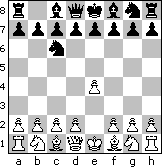
Below is the main picture of the B00 Nimzovich Defense with the moves 1.e4 Nc6.

B00 Nimzovich Defense
1.e4 Nc6
B00 Nimzovich Defense main picture
By chess engine: White is slightly better (+0.42)
Notes: +0.42 means that the White position is better as if White won 0.42 pawns by material (+ means that White is better/- Black). Chess engine evaluates and shows whose position is better as follows: 0-0.50 position is equal; 0.51-1.00 slightly better; 1.01-1.50 better; 1.51+ much better.
Learn the Nimzovich Defense Chess Opening 1.e4 Nc6

II. Nimzovich Defense: 8 Official Variations


• B00 Nimzovich Defense
1.e4 Nc6 (see next)
B00 Nimzovich Defense variations

• B00 Nimzovich Defense, Wheeler gambit variation
1.e4 Nc6 2.b4 Nxb4 3.c3 Nc6 4.d4
By chess engine: Black is slightly better (-0.64)

• B00 Nimzovich Defense, 2.Nf3 variation
1.e4 Nc6 2.Nf3 (see next, link below)
2.Nf3 variation, Nimzovich Defense
By chess engine: The position is equal (+0.00)
This is the most popular variation of the Nimzovich Defense.
How to Play the Most Popular Nimzovich 2.Nf3 Variation

• B00 Nimzovich Defense, Colorado counter variation
1.e4 Nc6 2.Nf3 f5 (link below)
By chess engine: White is slightly better (+0.90)
How to Play the Nimzovich Defense Colorado ... 2.Nf3 f5

• B00 Nimzovich Defense, 2.d4 variation, "the Main line"
1.e4 Nc6 2.d4 (see next, link below)
2.d4 variation, the Main line
By chess engine: The position is equal (+0.07)
This is also called the Main line of the Nimzovich Defense.
How to Play the Main Line of the Nimzovich Defense ... 2.d4

• B00 Nimzovich Defense, Marshall gambit variation
1.e4 Nc6 2.d4 d5 3.exd5 Qxd5 4.Nc3
By chess engine: Black is slightly better (-0.77)
This variation runs via the Main line.

• B00 Nimzovich Defense, Bogolyubov variation
1.e4 Nc6 2.d4 d5 3.Nc3
By chess engine: The position is equal (-0.07)
This variation runs via the Main line.

• B00 Nimzovich Defense, Neo-Mongoloid defense variation
1.e4 Nc6 2.d4 f6
By chess engine: White is better (+1.36)
This variation runs via the Main line.

chess-openings-for-beginners.blogspot.com

How to Play the Scandinavian Defense Main Line


navigation icon For navigation

[: Chess Openings - See All Lessons]

[•: To the Main Page of Scandinavian Defense]

On this page of chess-openings-for-beginners.blogspot.com you can study how to correctly play the Scandinavian Defense Main Line which is 1.e4 d5 2.exd5 Qxd5. Learn proven playing lines of the Scandinavian Defense chess opening proved by chess master games and confirmed by chess engine evaluations! Now it's time to closely look at what you see below...

I. Scandinavian Defense Main Line

Main line of Scandinavian Defense
Chess Opening Name: Scandinavian Defense (1.e4 d5)
Variation Name: Scandinavian Defense Main Line
Moves: 1.e4 d5 2.exd5 Qxd5
ECO Code: B01
Popularity: 50%

The Main Line of the Scandinavian Defense is not an official variation of the Scandinavian (it is unofficial name), but it is the most popular playing line of the Scandinavian Defense (50% of all chess master games). By statistics, the chess masters play: 2.exd5 Qxd5 ~ 50%; 2.exd5 Nf6 ~ 40%; 2.exd5 c6, e6 ~ 5%. The Main Line of the Scandinavian Defense is the most popular play in the Scandinavian, and you should learn it first...

See All Official Variations of the Scandinavian Defense

II. How to Play Scandinavian Defense Main Line

1.e4 d5 Scandinavian Defense
2.exd5 Qxd5 Scandinavian Defense Main Line
3.Nc3 ...
If 3.Nf3, then 3... Bg4 4.Be2 Nc6 (+0.25).

3. Nc3, Main line of Scandinavian Defense
See three best moves to continue:
3... Qa5 ("classical"), Qd6 ("modern"), Qd8 ("old").
Learn 2 proven plays (variants) as shown below:

Variant 1 of 2 (3... Qa5 "classical")

3... Qa5 4.d4 c6 5.Bc4 Nf6 6.Nf3

3... Qa5 classical, Main line of Scandinavian

6... Bg4 7.h3 Bh5 8.g4 Bg6

3... Qa5 classical, final, Main line of Scandinavian
Study the best line to continue (by chess engine):
9.Bd2 Nbd7 10.Nd5 Qd8 11.Nf4 e6 (White is slightly better, +0.67)

Variant 2 of 2 (3... Qd6 "modern")

1.e4 d5 Scandinavian Defense
2.exd5 Qxd5 Scandinavian Defense Main Line
3.Nc3 ...
If 3.Nf3, then 3... Bg4 4.Be2 Nc6 (+0.25).

3. Nc3, Main line of Scandinavian Defense
3... Qd6 4.d4 Nf6 5. Nf3 a6

3... Qd6 modern, Main line of Scandinavian Defense
6.g3 Bg4 7.Bg2 Nc6

3... Qd6 modern, final, Main line of Scandinavian Defense
Study the best line to continue (by chess engine):
8.0-0 0-0-0 9.h3 Bh5 10.Be3 e6 (=Equal, +0.46)

^ Back to Top

On this page of chess-openings-for-beginners.blogspot.com you have studied how to play the Main Line of the Scandinavian Defense chess opening. The Main Line of the Scandinavian runs as 1.e4 d5 2.exd5 Qxd5. It is ECO code B01, and it covers 50% of all Scandinavian Defense games played by chess masters. You can learn more on playing the Main Line of the Scandinavian Defense by downloading and seeing the Scandinavian Defense PGN file on this site. Thank you!

How to Play Icelandic Gambit of Scandinavian Defense


navigation icon For navigation:

[: Links to All Chess Opening Lessons]

[•: To the Main Page of Scandinavian Defense]

On this page of chess-openings-for-beginners.blogspot.com you can study how to play the Icelandic Gambit of the Scandinavian Defense played under the parent Scandinavian variation 1.e4 d5 2.de Nf6. The Icelandic Gambit is very similar by moves to the Scandinavian Gambit (3.c4 e6 against 3.c4 c6).

I. Icelandic Gambit of the Scandinavian Defense


Icelandic Gambit of Scandinavian Defense
Opening: Scandinavian Defense (1.e4 d5)
Variation: Icelandic Gambit
Moves: 1.e4 d5 2.exd5 Nf6 3.c4 e6
Popularity: 2-3%, ECO: B01.

See All Variations of the Scandinavian Defense

II. How to Play Icelandic Gambit of the Scandinavian Defense


1.e4 d5 Scandinavian Defense
2.exd5 Nf6 3.c4 e6 Icelandic Gambit

Icelandic Gambit of Scandinavian Defense
3 best moves to continue:
4.d4 4.Nc3 4.Nf3 (played rarely)
See 2 proven lines (variants):

Variant 1 of 2 (4.d4)

4.d4 cxd5 5.Nc3 e6 6.Nf3 Be7 ...
If 4... Bg4, then 5.Qb3.
If 4... Bf5, then 5.dxc6 Nxc6 6.d5.

A final position of the Icelandic Gambit
Best line to continue by chess engine:
7.cxd5 Nxd5 8.Bd3 Nc6 9.0-0 0-0 (=Equal, +0.49)

Variant 2 of 2 (4.Nc3)

1.e4 d5 Scandinavian Defense
2.exd5 Nf6 3.c4 e6 Icelandic Gambit

Icelandic Gambit of Scandinavian Defense
4.Nc3 cxd5 5.d4 e6 6.Nf3 Be7

A final position of the Icelandic Gambit
Note: The same position as in Variant 1.
Best line to continue by chess engine:
7.cxd5 Nxd5 8.Bd3 Nc6 9.0-0 0-0 (=Equal, +0.49)

Scandinavian Defence PGN File to Study Variations

On this page you studied the Icelandic Gambit of the Scandinavian Defense, with 1.e4 d5 2.exd5 Nf6 3.c4 e6. This variation of the Scandinavian is played rarely in 2019 by chess masters. The best 3 moves to meet it are: 4.d4 4.Nc3 4.Nf3 (the latter answer is not common in play). The ECO code of this variation is B01.

How to Play Scandinavian Gambit of Scandinavian Defense


navigation icon For navigation

[: Chess Openings - See All Lessons]

[•: To the Main Page of Scandinavian Defense]

On this page of chess-openings-for-beginners.blogspot.com you can study how to correctly play the Scandinavian Gambit variation of the Scandinavian Defense under the parent Scandinavian variation 1.e4 d5 2.ed Nf6. Study best playing lines of the Scandinavian Defense proved in chess master play and evaluated by chess engine! Now it's time to look at what you have below...

I. Scandinavian Gambit Variation of the Scandinavian Defense

Scandinavian Gambit of Scandinavian Defense
Chess Opening Name: Scandinavian Defense (1.e4 d5)
Variation Name: Scandinavian Gambit
Moves: 1.e4 d5 2.exd5 Nf6 3.c4 c6
ECO Code: B01
Popularity: 3-5%

See All Variations of the Scandinavian Defense

II. How to Play Scandinavian Gambit Variation of the Scandinavian Defense

1.e4 d5 Scandinavian Defense
2.exd5 Nf6 3.c4 c6 Scandinavian Gambit

Scandinavian Gambit of Scandinavian Defense
Three best moves of White to continue:
4.d4 4.Nc3 4.Nf3 (played rarely)
Learn 2 proven plays (variants) as shown below:

Variant 1 of 2 (4.d4)

4.d4 cxd5 5.Nc3 e6 6.Nf3 Be7 ...
If 4... Bg4, then 5.Qb3.
If 4... Bf5, then 5.dxc6 Nxc6 6.d5.

A final position of the Scandinavian Gambit
Best line to continue (by chess engine):
7.cxd5 Nxd5 8.Bd3 Nc6 9.0-0 0-0 (=Equal, +0.49)

Variant 2 of 2 (4.Nc3)

1.e4 d5 Scandinavian Defense
2.exd5 Nf6 3.c4 c6 Scandinavian Gambit

Scandinavian Gambit of Scandinavian Defense
4.Nc3 cxd5 5.d4 e6 6.Nf3 Be7

A final position of the Scandinavian Gambit
Note: The same position as in Variant 1.
Best line to continue (by chess engine):
7.cxd5 Nxd5 8.Bd3 Nc6 9.0-0 0-0 (=Equal, +0.49)

Scandinavian Defence PGN File to Study Variations

On this page of chess-openings-for-beginners.blogspot.com you studied the Scandinavian Gambit of the Scandinavian Defense, with 1.e4 d5 2.exd5 Nf6 3.c4 c6. This variation of the Scandinavian was played rarely by chess masters in 2019. The best 3 moves to meet it are: 4.d4 4.Nc3 4.Nf3 (the latter answer is not common in play). The ECO code of this variation is B01.